
Construction & Building Material Blog

0%

Choosing Construction Scaffolding Ladders in 2026 means looking beyond height and price. A ladder must fit the scaffold’s access point, platform arrangement, expected load, and daily work conditions. A muddy site, a narrow bay, or gloves that reduce grip can change what feels safe in practice.

The risk is measurable. The U.S. Bureau of Labor Statistics recorded 421 fatal falls, slips, and trips in the construction industry in 2023. OSHA’s scaffold standard requires safe access when platforms are more than two feet above or below an access point. It permits portable ladders, stair towers, and other specified access options. OSHA Assistant Secretary Doug Parker has emphasized, “Falls are the leading cause of death in construction.” That warning makes ladder selection a safety decision, not a minor accessory purchase.

This guide compares ladder types by stability, fit, durability, portability, and compatibility with common scaffold setups. It will also examine rung design, locking features, materials, and how clearly manufacturers state load limits. A ladder that looks sturdy in a product photo may still be awkward to secure on a crowded jobsite. Check the manual. Check the fit. One limitation deserves attention: product specifications alone cannot prove that a ladder is suitable for every scaffold configuration. Always verify the manufacturer’s instructions and applicable site requirements before use.
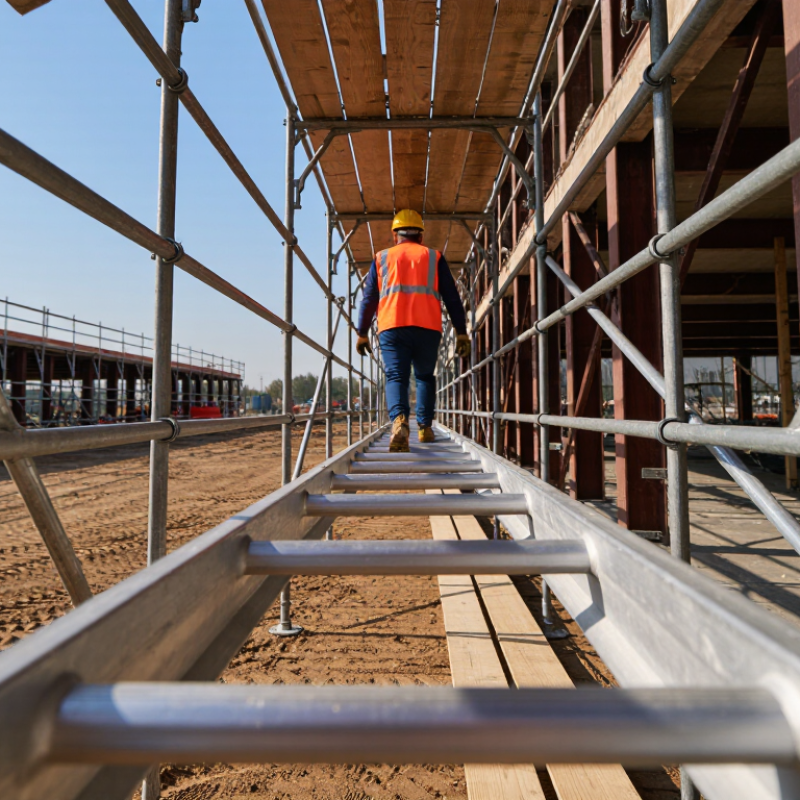
What Are the Best Construction Scaffolding Ladders in 2026?

Identify Scaffold-Ladder Types and OSHA’s 2-ft Access Threshold

Scaffold ladders come in several forms: portable, hook-on, attachable, and integral ladders built into scaffold frames. Stair towers and ramps are alternatives when crews need a broader, steadier access route. The right choice depends on the scaffold layout, landing space, and how workers carry tools. A narrow ladder beside a busy platform can become awkward fast. Small details matter.

OSHA’s construction scaffold standard, 29 CFR 1926.451(e)(1), requires access when a platform is more than 2 feet above or below its access point. Permitted options include ladders, stair towers, ramps, walkways, and integral prefabricated frames; cross braces are not access routes. That 2-foot threshold is easy to overlook during a quick setup. Check the actual platform-to-landing distance, not just the ladder’s appearance. The Bureau of Labor Statistics reported 421 fatal work injuries from falls, slips, and trips in construction in 2023; that figure covers many hazards, not scaffold ladders alone. It still underscores why access planning deserves attention. A secure-feeling ladder is not proof of safe access. My own instinct would be to recheck the landing, especially after the scaffold shifts.

Compare ANSI Duty Ratings: Type I 250 lb, IA 300 lb, and IAA 375 lb

When choosing a construction scaffolding ladder, compare its ANSI duty rating with the full load it will carry. Type I is rated for 250 pounds, Type IA for 300 pounds, and Type IAA for 375 pounds. These figures include the worker, clothing, tools, and materials—not just body weight. A tool belt, drill, and fasteners can add up quickly.

For example, a 220-pound worker carrying 25 pounds of tools exceeds a Type I rating. Type IA provides more capacity in that case, while Type IAA offers a larger stated margin. Do not treat that margin as permission to overload the ladder. Ratings describe capacity under specified conditions, not immunity to damage or poor setup. Small details matter.

On a scaffold, check that the ladder suits the access arrangement and can be secured according to its instructions. A high duty rating does not confirm that the ladder fits the scaffold, reaches the landing safely, or suits the work surface. Inspect rails, rungs, feet, and locking parts before use, especially after transport or rough handling. Labels are easy to trust too much; a cracked rung can make a strong rating meaningless. A level, firm landing is still easy to overlook during a rushed setup.

Best Construction Ladders in 2026: ANSI Duty Ratings Compared

Rated load capacity by ANSI ladder duty rating

Type I is rated for up to 250 lb, Type IA for 300 lb, and Type IAA for 375 lb. Rated load includes the user and anything they carry. These are portable-ladder duty ratings, not scaffold platform load ratings; check the ladder label and applicable instructions before use.

Match Ladder Height to OSHA’s 3-ft Landing-Rail Extension Rule

The best construction scaffolding ladder is one that fits the access point, platform height, and job conditions. For a portable ladder used to reach an upper landing, OSHA requires the side rails to extend at least 3 feet above the landing surface. That extra height gives workers a secure handhold while stepping on or off. Measure from the landing, not the ground. A ladder that looks tall enough from below may still fall short.

Tips: Measure the vertical distance before choosing a ladder. Check the rails at the landing. No guesswork. If a 3-foot extension is not possible, OSHA requires the ladder to be secured and a grasping device provided. Confirm the setup against current OSHA requirements and the ladder manufacturer’s instructions.

On scaffold jobs, access can shift as platforms change. Recheck ladder height and placement after each adjustment. Set the ladder on a firm, level surface, and keep its rails clear of mud, paint, and loose material. A quick visual check can miss a small height gap, especially on uneven ground. That detail deserves a second look. Also verify the ladder’s duty rating against the worker, tools, and materials it will carry.

Check Extension-Ladder Setup Against OSHA’s 4:1 Angle Rule

What Are the Best Construction Scaffolding Ladders in 2026?

A suitable access ladder should feel stable underfoot and reach the work area without forcing awkward climbing. For extension ladders, setup matters as much as the ladder itself. OSHA’s construction standard calls for a non-self-supporting ladder to be positioned so its horizontal base-to-support distance is about one-quarter of its working length. In practical terms, that is roughly one foot out for every four feet up. Measure the ladder, not just the wall. A quick visual estimate can be misleading, especially on uneven ground.

Tips: Place the feet on firm, level ground. Secure the ladder against movement, and extend it at least three feet above an upper landing when used for access. Check the rails and rungs for damage before climbing.

A busy site makes small setup errors easy to miss. That deserves a second look. Keep the ladder clear of doorways and moving equipment, and never climb while carrying bulky materials. If the base slips or the top cannot be secured, stop and reposition it. The 4:1 rule is a useful starting point, not a substitute for inspecting the actual surface, ladder, and access point.

Select the Best 2026 Ladder by Task, Load, Material, and Site Conditions

What Are the Best Construction Scaffolding Ladders in 2026?
Select the Best 2026 Ladder by Task, Load, Material, and Site Conditions

The best ladder depends on the job, not a single top-rated model. For frequent access between scaffold levels, choose a ladder designed for scaffold use and compatible with the structure. Check its rated capacity against the worker, tools, and materials carried together. A tool belt and drill add weight quickly. Leave a sensible margin. A ladder that barely meets the expected load is a poor fit.

Material and site conditions matter just as much. Aluminum is light and easy to reposition, but it conducts electricity, so it is unsuitable near exposed electrical hazards. Fiberglass can be a better choice in those areas, though it is heavier to move. On uneven or muddy ground, inspect the base and surrounding surface before setup. Wind, rain, and debris can change conditions during a shift. Recheck after breaks; it can feel like overkill, but the site may have changed.

Tips: Confirm the ladder’s rated load and scaffold compatibility. Check rungs, feet, and attachment points for damage before use. Keep access clear, and secure the ladder as specified by its manufacturer. If the setup feels unstable, stop and reassess rather than trying to compensate with a quick adjustment.

What Are the Best Construction Scaffolding Ladders in 2026? — Select the Best 2026 Ladder by Task, Load, Material, and Site Conditions

Practical comparison of ladder and access options for construction scaffold work. Confirm dimensions, compatibility, and capacity against the equipment label and manufacturer instructions.
Type Best suited task Load selection Material considerations Site conditions and setup Key limitation
Scaffold-integrated access ladder Routine access between scaffold levels when the scaffold system is designed to accept an internal ladder. Use only the capacity specified for the ladder and scaffold system; include the climber, clothing, tools, and carried materials. Steel is durable for demanding sites; aluminum is lighter. Use the material and components approved for the scaffold system. Best where the ladder can be properly attached, the access opening is protected, and the scaffold is erected on a firm, level base. Compatibility is system-specific. Do not modify frames or use an improvised ladder connection.
Hook-on scaffold ladder Moving between scaffold lifts where a compatible, purpose-made hook ladder is specified. Check the ladder’s marked capacity and the scaffold manufacturer’s requirements; do not infer capacity from appearance. Aluminum models are easier to handle; steel models may suit rougher handling. Inspect hooks, rungs, and locking or retention features. Hooks must seat fully on the intended scaffold member, with the ladder secured against movement as instructed. Not interchangeable across scaffold systems unless compatibility is confirmed.
Extension ladder Occasional access from the ground to a scaffold landing when permitted by the site plan and applicable rules. Choose a marked duty rating that covers the total load. Common U.S. ANSI duty ratings include Type III: 200 lb, Type II: 225 lb, Type I: 250 lb, Type IA: 300 lb, and Type IAA: 375 lb. Aluminum is relatively light but conducts electricity. Fiberglass is nonconductive when clean and undamaged, but heavier; no ladder material makes contact with power lines safe. Requires firm footing, the correct setup angle, secure placement, and adequate landing clearance. Where required, the ladder must extend above the landing or have an equivalent compliant handhold arrangement. Not a substitute for a scaffold’s designed access system; do not rest it on an unstable scaffold component.
Fiberglass extension ladder Ground-to-landing access near electrical work, only when the ladder is suitable for the task and local requirements. Select by the ladder’s actual label and duty rating; account for the worker, tools, and materials together. Fiberglass rails do not conduct electricity in the same way as metal rails, but contamination, moisture, damage, or nearby energized equipment can still create serious hazards. Useful where a nonmetallic ladder is required and there is enough room to extend, secure, and inspect it. Heavier than comparable aluminum ladders; never use as protection from electrical contact or as a replacement for de-energizing and clearance procedures.
Stepladder or platform ladder Short-duration work at a suitable height on a stable floor, such as light finishing or inspection tasks. Use the marked duty rating and remain within it, counting the user and everything carried. Aluminum is lighter for frequent repositioning; fiberglass may be preferred where a nonconductive ladder is specified. Open fully with spreaders locked; place all feet on a level, stable surface. A platform ladder can provide a larger standing surface. Generally not intended to provide access between scaffold levels. Never stand on a step, cap, or platform beyond the manufacturer’s instructions.
Scaffold stair tower Repeated access, carrying tools, or moving between levels where a stair system is practical. Follow the stair tower and scaffold system’s stated load and occupancy limits; ladder duty-rating categories do not replace those limits. Use the components specified for the tower. Materials and configuration depend on the system and site requirements. Often preferable for frequent traffic, longer-duration projects, or routes where ladder climbing is difficult. Requires adequate footprint and proper installation. It is a stair-access system, not a ladder; it needs more space and must be erected and inspected as part of the scaffold.

Selection and safety note: For U.S. ladder duty ratings, the stated pounds refer to the maximum intended load, including the user and materials. Ratings and requirements vary by product, jurisdiction, and application. Follow the ladder and scaffold labels, the manufacturer’s instructions, and applicable regulations; inspect equipment before use and keep access clear.

FAQS

How far should ladder rails extend above an upper landing?

Extend the side rails at least 3 feet above the landing surface. Measure from the landing, not the ground. No guesswork.

What should I do if the ladder cannot extend 3 feet above the landing?

Secure the ladder and provide a grasping device, as required by applicable safety rules. Check the setup against current requirements and the ladder instructions.

How should I position an extension ladder?

Set its base about one foot out for every four feet of working length. Use firm, level ground, and secure the ladder against movement.

Is a visual check enough to confirm the ladder is properly set?

Not always. A small height gap or uneven surface can be easy to miss. Measure the setup and look again.

How do I choose a ladder’s load rating?

Include the worker, tools, and materials carried together. A tool belt and drill add weight quickly, so leave a sensible margin.

Which ladder material suits different site conditions?

Aluminum is light but conducts electricity, so avoid it near exposed electrical hazards. Fiberglass may suit those areas, though it is heavier to move.

What should I inspect before climbing?

Check the rungs, rails, feet, and attachment points for damage. Keep mud, paint, and loose material off the rails.

When should I reassess a scaffold ladder setup?

Recheck it after platform changes, breaks, or shifts in weather. Wind, rain, and debris can change the surface. It may feel excessive, but conditions do change.

Conclusion

Choosing the best Construction Scaffolding Ladders in 2026 starts with understanding how the ladder will provide access to the scaffold. Consider the ladder type and whether the access point meets OSHA’s 2-foot threshold. Next, match the ladder’s duty rating to the combined weight of the worker, tools, and materials: Type I is rated for 250 pounds, Type IA for 300 pounds, and Type IAA for 375 pounds. These ratings help guide selection, but the ladder must also suit the demands of the specific task.

Height and setup are equally important. Choose a ladder that extends at least 3 feet above the landing rail when required, and set an extension ladder at the OSHA-recommended 4:1 angle for stable access. Then compare materials, load capacity, and site conditions such as exposure, available space, and frequency of use. A careful match between ladder design and the work environment supports safer, more practical scaffold access throughout the project.

Ethan

Ethan

Ethan is a skilled marketing professional with a deep understanding of our company's core business and its offerings. With a passion for communication and a knack for storytelling, he plays a pivotal role in enhancing our online presence through insightful blog posts that keep our audience informed......