
Construction & Building Material Blog
How to Choose China Best Mason Mix Cement Blocks?
Table of Contents
- Understanding Mason Mix Cement Blocks and Their Main Applications
- Identifying the Right Block Size, Strength, and Material Composition
- Evaluating Chinese Manufacturers, Certifications, and Production Standards
- Comparing Prices, Quality Control, Customization, and Minimum Order Terms
- Checking Samples, Shipping Details, and After-Sales Support Before Buying
- FAQS
- Conclusion
- Related Posts
Choosing China’s best Mason Mix Cement Blocks requires more than comparing factory prices. The right product must match your project’s climate, load requirements, wall design, and local building standards. A block that performs well in a dry warehouse may absorb too much water on a rainy construction site. That difference matters.
Experienced buyers usually examine compressive strength, density, water absorption, dimensional accuracy, and surface quality. They also request recent test reports, production samples, and clear technical data. Reliable manufacturers should explain their raw materials, curing process, quality controls, and packing methods. Factory audits can reveal details that brochures often hide, such as cracked corners, inconsistent sizes, or poorly protected pallets. Do not guess.
The word “best” is not absolute. It depends on whether you need interior partitions, exterior walls, landscaping, or heavy-duty construction. Mason Mix Cement Blocks should also work smoothly with the selected mortar and finishing system. Ask suppliers about sample approval, batch consistency, lead times, and after-sales support. Verify certificates independently when possible, rather than trusting attractive claims. Even careful buyers can overlook shipping moisture or small dimensional differences. I have seen minor size variations create wider mortar joints and slower installation. That lesson is easy to remember. Careful comparison, practical testing, and honest supplier communication create a safer purchasing decision. A lower price may help the budget, but dependable performance protects the entire project.
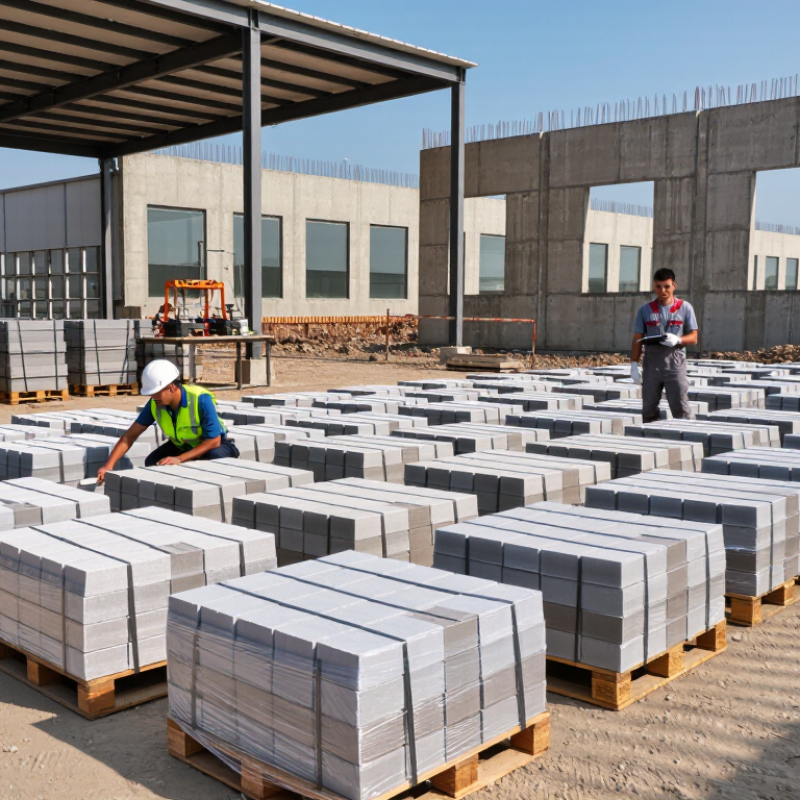
Understanding Mason Mix Cement Blocks and Their Main Applications
Mason mix cement blocks are usually concrete masonry units made from cement, graded aggregate, water, and controlled additives. Their performance depends on density, curing, dimensions, and compressive strength. A reliable Chinese supplier should provide test reports, production records, and batch traceability. Ask whether results follow ASTM C90 or equivalent EN standards. Do not judge quality by surface color alone. A smooth face can hide weak curing.
According to the USGS Mineral Commodity Summaries 2024, U.S. cement production reached approximately 91 million metric tons in 2023. This scale reflects cement’s importance, but it also highlights resource consumption. The International Energy Agency estimates cement production causes about 7% of global energy-related carbon dioxide emissions. For that reason, selecting blocks with recycled aggregate, efficient curing, and accurate mix control deserves attention. The greener option is not always the stronger option.
These blocks serve several practical roles. Load-bearing units support walls in low-rise buildings, warehouses, and boundary structures. Hollow units reduce dead load and create space for reinforcement, insulation, or services. Solid blocks suit retaining features, equipment bases, and areas needing impact resistance. In coastal or wet locations, check water absorption and freeze-thaw performance. In my experience, buyers often request high strength but ignore joint mortar compatibility. That mistake can create cracking. It is worth comparing three production batches, checking weight variation, and inspecting chipped edges before placing a large order. Imperfect samples reveal more than polished photographs.
How to Choose China Best Mason Mix Cement Blocks?
Understanding Mason Mix Cement Blocks and Their Main Applications
Compressive strength is one of the most important factors when selecting cement blocks. The chart compares representative minimum strength levels for common masonry applications. Always confirm local building codes, wall loads, exposure conditions, and the block manufacturer's test data before purchasing.
How to read the chart: Non-loadbearing concrete masonry units are commonly specified at a lower strength level, while loadbearing units require substantially higher compressive strength. AAC blocks are lightweight cementitious masonry units with strength classes that vary by density and application.
Identifying the Right Block Size, Strength, and Material Composition
How to Choose China Best Mason Mix Cement Blocks?
Choosing a cement block starts with dimensions, not price. Standard wall blocks commonly measure 390 × 190 × 190 mm, while partition units are often thinner. Confirm the block size against the wall layout, mortar joint, reinforcement, and local construction code.
A small dimensional error can create uneven courses and excessive mortar use. China’s GB/T 8239-2014 standard lists concrete small hollow block strength grades from MU3.5 to MU20. Select the grade according to structural calculations, not appearance.
Strength must be tested on the net block area. ASTM C90-22 requires load-bearing concrete masonry units to reach an average net-area compressive strength of 13.1 MPa. This figure is useful when comparing Chinese factory reports with international specifications.
Ask for recent test results, curing records, water absorption, density, and dimensional tolerance. Reports from an accredited laboratory are more reliable than a sales sheet. Still, one test batch cannot represent every shipment.
Cement quality, aggregate grading, moisture content, and curing time all matter. Dense natural aggregate usually improves strength, while lightweight aggregate can reduce wall weight and improve insulation. Recycled aggregate may be acceptable, but its absorption needs careful control.
Look for consistent color and compact edges, but do not treat appearance as proof. A block can look excellent and fail after poor curing. That is an uncomfortable, common oversight.
On-site sampling and independent testing remain worthwhile, especially for humid climates or high-rise masonry.
Evaluating Chinese Manufacturers, Certifications, and Production Standards
Choosing China’s best masonry cement blocks starts with the manufacturer, not the lowest quotation. During factory evaluations, inspect raw material storage, mixer cleanliness, mold condition, and curing areas. Fresh cement should be protected from moisture. Aggregates should show consistent grading. Ask for production records from recent batches, not only prepared samples.
Certifications need careful checking. A credible supplier should provide current quality certificates, laboratory reports, and documents showing compliance with applicable Chinese standards. ISO 9001 can indicate organized management, but it does not prove block strength. Request independent tests for compressive strength, water absorption, density, dimensional tolerance, and freeze-thaw performance when relevant. Verify the laboratory’s accreditation and report numbers. Small details matter.
Production discipline matters more than polished brochures. Observe whether workers measure water and cement accurately, control vibration, and maintain curing time. Ask how rejected blocks are recorded and handled. A factory may pass one inspection and still vary between shipments. That risk is easy to underestimate. I would compare at least three production batches before signing a contract. A sample can look excellent. It may not represent everyday output. Keep sealed reference samples, define acceptance limits, and arrange pre-shipment inspection. No audit is perfect. Leave room for rechecking.
How to Choose China Best Mason Mix Cement Blocks? – Evaluating Chinese Manufacturers, Certifications, and Production Standards
| Evaluation Dimension | Relevant Standard or Reference | Verified Data or Common Requirement | Documents and Evidence to Request | Purchasing Recommendation |
|---|---|---|---|---|
| Product Type | GB/T 8239-2014 | Ordinary concrete small hollow blocks are covered by this Chinese national product standard. A commonly ordered nominal format is 390 × 190 × 190 mm, although other sizes are available. | Product specification sheet, approved drawing, dimensional schedule, and sample inspection report. | Confirm Before Order Match block dimensions with wall thickness, reinforcement details, mortar joints, and local building-code requirements. |
| Compressive Strength | GB/T 8239-2014 and GB/T 4111-2013 | Concrete small hollow blocks are classified by strength grades such as MU3.5, MU5.0, MU7.5, MU10, MU15, and MU20. The required grade depends on structural design and exposure conditions. | Third-party compressive-strength test report showing grade, specimen age, sampling method, curing condition, and test result. | Highest Priority Do not select blocks solely by appearance or price; compare the declared grade with the project engineer’s design requirement. |
| Test Method | GB/T 4111-2013 | This standard provides test methods for concrete small hollow blocks, including procedures used to evaluate properties such as compressive strength and dimensional performance. | Complete laboratory report with standard number, test equipment identification, laboratory signature, sample quantity, and test date. | Verify Traceability Reject reports that omit the product model, production batch, test basis, or sample identification. |
| Dimensional Accuracy | GB/T 8239-2014 | Length, width, height, wall thickness, hole size, and appearance are controlled characteristics. The applicable tolerances must be checked against the current product standard and approved drawings. | In-process inspection records, calibrated measuring-tool records, final inspection checklist, and representative samples. | Check Consistency Inspect samples from different pallets or production dates rather than relying on one hand-selected sample. |
| Water Absorption and Moisture | Product specification and project requirements | Water absorption, moisture content, drying shrinkage, and curing condition can affect mortar bonding, cracking risk, and wall performance. These values should be confirmed for the selected block type. | Product test report, curing records, moisture-control procedure, and storage instructions. | Project Specific Ask for measured values rather than accepting general statements such as “low absorption” or “crack resistant.” |
| Raw Materials | Approved formulation and applicable Chinese material standards | Concrete blocks normally use cementitious binder, aggregates, water, and, where applicable, approved mineral or chemical admixtures. Mix proportions and material sources should remain controlled between batches. | Cement and aggregate certificates, incoming-material inspection records, mix-design approval, and batch traceability records. | Audit Required Check whether recycled or industrial by-product materials are declared and legally permitted for the intended application. |
| Quality Management System | GB/T 19001-2016 / ISO 9001:2015 | ISO 9001 certification demonstrates that a quality-management system has been audited within a defined scope; it does not by itself prove that every block meets the required product standard. | Valid certificate, certification scope, issuing certification body, audit status, and certificate-verification record. | Supporting Evidence Use the certificate to evaluate process control, but require product-specific test results separately. |
| Environmental Management | ISO 14001:2015 | ISO 14001 addresses environmental-management processes, including environmental aspects and operational controls. It is not a substitute for product safety or structural testing. | Valid environmental-management certificate, scope of certification, environmental permits where applicable, and waste-handling records. | Useful for ESG Review Give preference to suppliers that can document dust, wastewater, waste-material, and energy-control procedures. |
| Worker and Production Safety | ISO 45001:2018 and applicable Chinese regulations | ISO 45001 evaluates an occupational-health and safety management system. It does not establish the mechanical performance of concrete blocks. | Valid certificate, risk-assessment records, equipment-maintenance records, and production-site safety procedures. | Factory-Risk Control Include machinery guarding, lifting operations, dust control, and worker training in the factory audit. |
| Radioactive-Material Compliance | GB 6566-2010 | This Chinese mandatory standard sets limits for radionuclides in building materials. It is particularly relevant when blocks contain industrial by-products or mineral residues. | Radiological test report from a qualified laboratory, raw-material declaration, and batch or product identification. | Safety Verification Request a report applicable to the actual product and raw-material composition, not a generic company statement. |
| Fire Performance | GB 8624-2012 | GB 8624-2012 provides the Chinese classification system for the burning behavior of building materials and products. The required classification depends on the wall assembly and building application. | Fire-performance test report, declared product composition, and assembly-level documentation where required. | Confirm Assembly Use Verify whether the report applies to the block alone or to the complete wall system, including finishes and insulation. |
| Production Equipment | Manufacturer process-control plan | Reliable production normally includes controlled batching, mixing, molding, vibration or pressing, curing, palletizing, and storage. Automated equipment is useful only when process parameters are monitored. | Equipment list, maintenance plan, calibration records, production-flow chart, and batch-control records. | Inspect in Person Evaluate actual production capacity and consistency instead of relying only on claimed machine capacity. |
| Curing Process | Approved manufacturing procedure and test requirements | Strength and dimensional stability depend on mix control, compaction, curing temperature, curing time, and moisture management. Concrete strength is commonly assessed at a 28-day reference age. | Curing logs, temperature and humidity records where applicable, production-batch records, and age-at-test information. | Check Batch Age Confirm the minimum dispatch age and ensure that test results correspond to the same curing regime used in production. |
| Independent Laboratory | CNAS and CMA accreditation systems | CNAS is China’s national accreditation body for conformity-assessment organizations. CMA is China’s metrology accreditation designation for qualified testing institutions. Accreditation scope must cover the requested test. | Laboratory accreditation certificate, scope annex, report number, authenticity-verification method, and original signed report. | Prefer Independent Testing Confirm that the laboratory’s accreditation scope includes concrete block testing and that the report is product-specific. |
| Batch Traceability | Quality-control best practice | Each shipment should be traceable to a production date, batch number, product specification, raw-material lot, curing record, and final inspection result. | Pallet labels, batch records, inspection release note, packing list, and retention-sample policy. | Contract Requirement Make traceability and document retention part of the purchase contract and inspection plan. |
| Pre-Shipment Inspection | Agreed inspection and sampling plan | Inspection should cover dimensions, appearance, quantity, packaging, labeling, and laboratory verification of specified performance characteristics. | Inspection checklist, sampling plan, photographs, nonconformity report, and corrective-action records. | Use Before Payment Combine factory inspection with independent testing when the blocks are intended for structural or high-volume construction. |
Note: Chinese national standards and project specifications should be checked for the latest applicable edition before purchase. Product grades, dimensions, fire requirements, and acceptance criteria must be confirmed against the destination country’s building regulations and the project engineer’s approved design.
Comparing Prices, Quality Control, Customization, and Minimum Order Terms
How to Choose China’s Best Mason Mix Cement Blocks?
Price comparisons should begin with landed cost, not the factory quotation. Request the block price, mold charges, packaging, inland transport, inspection fees, and shipping separately. The IEA’s 2023 cement sector report estimates global cement production at about 4.2 billion tonnes annually. Small differences in cement content can therefore affect both cost and strength. A very low quote deserves careful questioning. Is the mix consistent? Are rejected blocks included?
Quality control needs measurable evidence. Ask for recent compressive-strength, water-absorption, density, and dimensional-tolerance reports. Compare results with applicable standards, such as GB/T 8239, ASTM C90, or EN 771-3. During factory checks, examine aggregate storage, automated batching, curing temperature, and random pallet sampling. One attractive sample proves little. Batch records matter more. The Global Cement and Concrete Association reports that cement production contributes roughly 7% of global carbon dioxide emissions, so responsible suppliers should also explain material efficiency and waste control.
Customization may include hollow-core design, density, surface texture, color, and packaging marks. Confirm mold ownership and replacement costs before production. Custom molds can improve installation speed, but they may raise the first-order price substantially. Minimum order terms also require precision: ask about trial quantities, mixed containers, lead time, payment milestones, and remedies for failed testing. A supplier accepting a small trial order may cost slightly more, yet reduce financial exposure. I would not rely on promises alone. Written specifications and independent pre-shipment testing remain essential. Mistakes still happen. The contract should acknowledge that reality.
Checking Samples, Shipping Details, and After-Sales Support Before Buying
How to Choose China Best Mason Mix Cement Blocks?
A reliable purchase starts with physical samples, not attractive catalog photos. Request several blocks from the actual production batch. Check their length, width, surface texture, corner strength, and color consistency. Weigh one dry block, then compare it after controlled water exposure. Excessive absorption may create installation problems. Tap the block gently. A dull sound can suggest internal weakness, although this test is not conclusive. Ask an independent engineer to verify compressive strength and dimensional tolerance. My own review process would be incomplete without laboratory results.
Shipping details deserve equal attention. Confirm the quantity per pallet, protective wrapping, container loading method, and moisture control. Ask whether pallets can be lifted safely by your site equipment. Clarify production time, loading time, estimated transit time, and unloading responsibilities in writing. Request photos before sealing the container. Small cracks may hide beneath loose wrapping. They are easy to miss.
After-sales support should be tested before payment. Ask for a named contact, response times, batch records, and a clear claim procedure. The supplier should explain what evidence is required for damaged or inconsistent blocks. Keep photographs, packing lists, inspection reports, and delivery notes. Do not assume every problem will be resolved quickly. A replacement promise without a practical transport plan is weak support. I would also order a modest trial shipment. It costs more per unit, but it can reveal packaging failures and communication gaps before a large project depends on them.
FAQS
Start with the wall layout, not the lowest price. Common wall blocks measure 390 × 190 × 190 mm. Check partition thickness, mortar joints, reinforcement, and local codes. A small error can create uneven courses and extra mortar.
Select strength through structural calculations, not visual appearance. Concrete hollow blocks may range from MU3.5 to MU20 under applicable standards. Load-bearing designs need careful engineering review. A strong-looking block may still fail testing.
Request recent compressive-strength results measured on the net block area. One international reference requires an average net-area strength of 13.1 MPa for load-bearing units. Also request curing records, density, absorption, and dimensional tolerance. One batch proves little.
Ask about cement quality, aggregate grading, moisture content, and curing time. Dense natural aggregate often improves strength. Lightweight aggregate can reduce wall weight and improve insulation. Recycled aggregate may work, but absorption requires closer control.
No. Look for consistent color, compact edges, and clean surfaces. These details help identify irregular production. They do not prove strength. Poor curing can weaken an attractive block. This is easy to overlook.
Compare the complete landed cost. Separate block prices, mold charges, packaging, inland transport, inspections, and shipping. Ask whether rejected blocks are included. An unusually low quote deserves questions about mix consistency and curing.
Review compressive-strength, absorption, density, and dimensional-tolerance reports. Compare them with relevant construction standards. Inspect aggregate storage, automated batching, curing conditions, and random pallet samples. Batch records matter more than one perfect sample.
Confirm hollow-core design, density, texture, color, packaging marks, and mold ownership. Ask about replacement costs and trial quantities. Clarify mixed containers, lead time, payment stages, and failed-test remedies. Written specifications reduce confusion, though mistakes can still happen.
Conclusion
Choosing the right Mason Mix Cement Blocks requires more than comparing unit prices. First, understand how the blocks will be used, such as for load-bearing walls, partitions, foundations, or decorative construction. Confirm the required dimensions, compressive strength, density, water absorption, and material composition so the blocks match the project’s climate, structural design, and installation method. Clear technical requirements will help prevent delays, waste, and performance problems.
When evaluating Chinese manufacturers, review their production processes, quality-control procedures, testing records, and relevant certifications. Compare quotations carefully, including customization options, minimum order quantities, packaging, lead times, and shipping terms. Before placing a large order, request samples and verify their size, surface finish, strength, and consistency through practical inspection or independent testing. It is also important to confirm communication standards, warranty conditions, replacement policies, and after-sales support. A reliable supplier should provide transparent documentation and stable quality, enabling buyers to make a confident and cost-effective purchasing decision.

Blog Tags: