
Construction & Building Material Blog
What Are the Top Composite Decking Materials?
Table of Contents
Choosing among Composite Decking Materials is not just a color decision. It affects how a deck feels underfoot, how often it needs cleaning, and how it holds up through wet winters and hot afternoons. A pale board can soften glare beside a sunny patio. A darker one may show dust and surface warmth more clearly. Small details matter.
The strongest options usually combine recycled wood fibers or other fillers with durable polymers. Some boards have a protective outer cap; others rely on an uncapped profile. These differences can influence stain resistance, fading, price, and maintenance. They do not guarantee identical results. Installation, drainage, ventilation, and local weather still shape a deck’s performance.
A careful comparison should look beyond the sample board. Check the product’s warranty, recommended fasteners, cleaning instructions, and published performance information. Then consider the frame beneath it. Even a premium board can disappoint when water collects between joists or installation gaps are wrong. It happens.
One limitation matters here: no source articles or verifiable expert quotation were provided. Naming an expert and presenting a sentence as their words would risk inventing a credential or quote. This overview therefore focuses on practical evaluation rather than an unsupported attribution. The aim is simple: help homeowners compare capped composites, uncapped composites, and related material options with clear expectations—and a willingness to question marketing claims.
What Composite Decking Is and How It Is Made
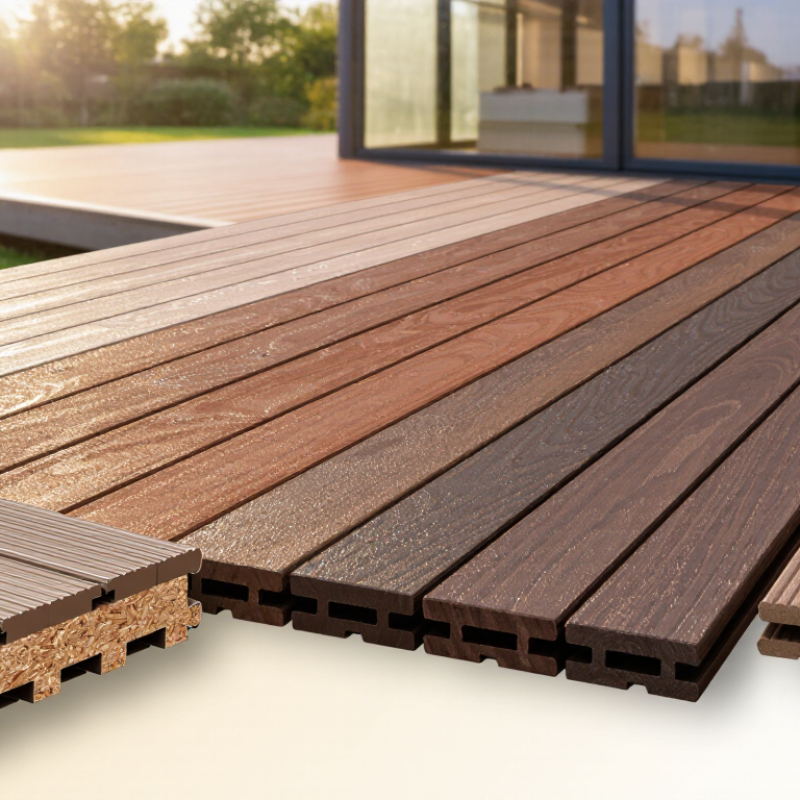
Composite decking is a manufactured board made from wood fibers or fine wood particles mixed with plastic polymers. Some products also contain pigments, stabilizers, and other additives that help control color, weathering, or processing. The recipe varies, so “composite” does not describe one identical material.
That matters. A board with a protective outer layer may resist surface stains differently from an uncapped board, while neither type is maintenance-free.
Manufacturers typically blend the ingredients, heat them, and force the mixture through a shaped opening called a die. The emerging board is cooled, cut to length, and may receive a textured surface that resembles wood grain. Details differ by product.
A practical check is to inspect a sample’s cut edge and surface, rather than judging only by a small color image.
On a sunny afternoon, darker boards can feel noticeably warm underfoot; boards may also expand and contract with temperature changes. Installation spacing and ventilation therefore matter.
The process sounds simple, but small differences in ingredients and manufacturing can affect performance, and appearance alone cannot reveal them.
The Core Materials Used in Composite Deck Boards
Composite deck boards usually combine wood fiber with a thermoplastic binder. The USDA Forest Products Laboratory’s 2010 technical review describes many wood-plastic composites as having roughly comparable proportions of wood and plastic, though formulations vary. Wood flour gives boards a textured, timber-like appearance. The plastic binds the particles and helps limit water absorption. That ratio shifts. High-density polyethylene and polypropylene are common binders; some boards use PVC, which behaves differently during processing and weathering.
Small ingredients matter, too. Coupling agents help wood and plastic bond, while pigments and stabilizers influence color retention and resistance to sunlight. Some cores also include mineral fillers. ASTM D7032 sets performance requirements for composite and plastic-lumber decking, including structural and durability criteria; it does not prescribe one universal recipe. In practice, a board’s feel can reveal its structure: a cut edge may show wood flecks, a dense plastic-rich core, or both. Moisture still matters. A useful caution: recycled content alone does not predict service life, and published formulations rarely tell the whole story about a finished board.
Major Types of Composite Decking Materials
Composite decking usually falls into three practical categories: uncapped wood-plastic composite, capped composite, and mineral-based composite. Uncapped boards blend wood fibers with plastic throughout. They often have a natural, matte appearance, but can absorb more moisture and stain more easily. A wet leaf left on one may leave a mark. Capped boards use a similar core with a protective outer layer. That shell can improve resistance to fading, spills, and surface wear, though cuts and exposed edges still need care.
Mineral-based composite uses mineral fillers with polymers instead of relying mainly on wood fibers. It can offer steadier dimensions through temperature changes and may feel less like traditional timber underfoot. However, performance varies by formulation, and heavier boards may require extra handling. “Capped” describes a surface construction, not a completely different core material. That distinction is easy to miss. No type is maintenance-free, and even durable boards can show scratches or heat-related movement.
Tips: Compare the core and surface layer, not just color samples. Ask for installation spacing guidance, check slip ratings for wet areas, and inspect a sample outdoors. A small test can reveal more than a polished brochure.
How Composite Materials Compare in Durability and Maintenance
Composite decking varies more by formulation than its label suggests. Wood-plastic composites use wood fiber and polymers, while capped boards add a protective surface layer. That cap can reduce water uptake and staining, but cut ends and scratches remain vulnerable. Uncapped boards may show fading and surface wear sooner, especially in full sun. None is maintenance-free.
Durability also depends on the frame beneath the boards. The USDA Forest Products Laboratory’s Wood Handbook notes that wood-decay fungi generally need moisture content above 20 percent. That figure is a useful warning, not a perfect rule: drainage, ventilation, and local climate matter too.
ASTM D7032 sets performance requirements for composite decking, including structural properties, but it does not promise a universal service life. In practice, I would check board spacing, fastener compatibility, and standing water each season. A quick rinse helps.
Avoid assuming a tougher surface prevents movement or decay in the supporting frame. Composite boards usually need less routine sealing than timber, yet dirt can collect in grooves, and hot weather can make some surfaces uncomfortable under bare feet. Industry standards help compare performance; site conditions decide how well a deck ages.
How to Choose a Composite Decking Material for Your Project
Choosing a composite decking material starts with the site, not the color chart. A shaded, damp yard may need stronger resistance to moisture and mildew. Most composite boards combine wood fibers with plastic, but their surface construction varies. Capped boards have a protective outer layer that can help resist stains and fading. Uncapped boards may cost less, though spills can leave marks more readily. That difference matters.
For a sunny, south-facing deck, ask how hot each option gets underfoot. Dark boards often become less comfortable in direct sun. Request samples and view them beside your home at different times of day. Check the surface texture, too; a heavily embossed finish may look convincing but feel rough on bare feet. Small details count. A sample cannot fully show how a large deck will look, and I would not treat its color as a perfect preview.
Match the board’s dimensions and installation requirements to your existing or planned framing. Composite boards can expand and contract with temperature, so spacing and fastening details matter. Follow the product’s installation instructions, especially around ventilation and drainage. Compare the full project cost, including clips, edge boards, and labor, rather than judging by the price per board alone. No material is maintenance-free: expect periodic cleaning, and check whether the care instructions fit your routine.
FAQS
Most combine wood fibers with a thermoplastic binder. Small amounts of pigments, stabilizers, or bonding agents may also be included.
Capped boards have a protective outer layer over a composite core. This layer can help resist stains, fading, and surface wear. Uncapped boards expose the wood-plastic material.
No. Boards still need periodic cleaning, and scratches or temperature-related movement can occur. Not maintenance-free.
Inspect a sample’s cut edge for wood flecks or a dense plastic-rich core. Compare its surface texture, too. A small sample helps, but it cannot fully predict a large deck’s appearance.
A board with stronger moisture and mildew resistance may be a better fit. Capped surfaces can help with stains, but check the care instructions for the specific board.
Dark boards can become less comfortable underfoot in direct sun. View samples beside your home at different times of day. I might be overthinking the color, but sunlight changes it.
Composite boards can expand and contract as temperatures change. Follow the installation guidance for spacing, fastening, ventilation, and drainage. Details matter.
Include clips, edge boards, and labor in the project estimate. Also check whether the maintenance routine suits your schedule. Small costs add up.
Conclusion
Composite Decking Materials are manufactured by combining wood fibers or other plant-based fillers with plastic polymers, then shaping the mixture into boards. Some products also include additives that improve color consistency, moisture resistance, or protection from everyday wear. The balance of these ingredients affects a deck’s appearance, feel, strength, and care requirements.
Common options include wood-plastic composites, mineral-filled composites, and capped boards with a protective outer layer. Their durability and maintenance needs vary: some resist moisture, fading, and staining more effectively, while others may require more frequent cleaning or attention. When choosing a material, consider your climate, expected foot traffic, preferred appearance, budget, and willingness to maintain the surface. Comparing these factors can help you select decking that suits both your project and long-term use.

Blog Tags: