Construction & Building Material Blog
China has become an important sourcing market for Concrete Vibrators used in construction, precast production, roadwork, and infrastructure projects. Manufacturers and suppliers offer internal poker vibrators, external vibrators, high-frequency models, and portable electric units. Each type serves a different working condition. A small needle vibrator may suit columns and narrow forms, while a stronger unit can handle thick foundation pours. The choice should match concrete slump, reinforcement spacing, pour depth, and available power.
Reliable suppliers usually provide more than attractive catalog prices. They explain motor performance, shaft length, needle diameter, vibration frequency, insulation quality, and operating limits. Factory experience matters here. Workers should inspect winding quality, switch durability, bearing fit, and cable protection before shipment. Useful evidence includes production photographs, test records, user feedback, and clear warranty terms. Certifications can support confidence, but they should be verified against the actual model.
Field details reveal a lot.
A vibrator that overheats after twenty minutes is not a practical bargain. A poorly sealed switch can also create avoidable maintenance problems. Buyers should compare samples, request load testing, and confirm spare-part availability with Chinese manufacturers and suppliers. Export experience is helpful, especially when packaging, voltage, manuals, and after-sales communication are involved. Still, no supplier is perfect. Some specifications may look impressive but lack independent performance evidence. This guide examines product quality, technical capability, pricing factors, customization, and supplier reliability, helping buyers make a careful decision based on real construction needs rather than marketing language alone.
Types of Concrete Vibrators Manufactured in China
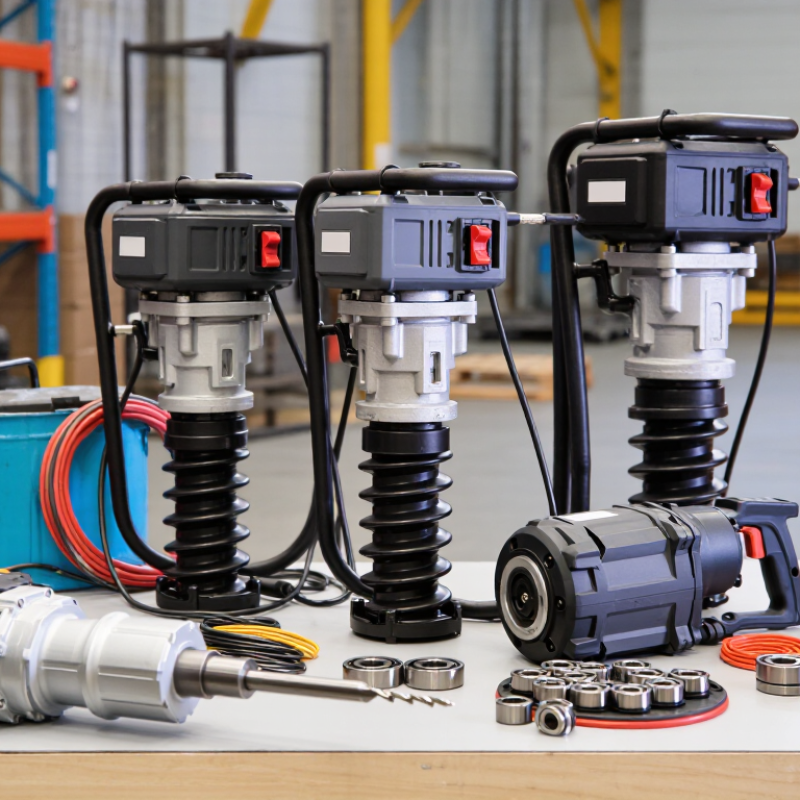
China manufactures several concrete vibrator types for different placement conditions. The common immersion vibrator uses a flexible shaft and poker head. Workers insert it into fresh concrete near columns, beams, and dense reinforcement. It removes trapped air and improves surface consistency.
External vibrators attach to formwork, making them useful for precast panels and narrow molds. Surface vibrators suit slabs, floors, and shallow sections. Screed vibrators combine leveling and compaction during concrete pouring. High-frequency electric models offer steady performance on many construction sites. Pneumatic versions work where electrical equipment is unsuitable, but they require a reliable air supply. Selection still depends on concrete slump, reinforcement spacing, pour depth, and available power.
Tips: Check vibration frequency, poker diameter, shaft length, motor protection, and replacement-part access. Request load-test records and inspect cable quality before purchase. A larger vibrator is not always better. It may move reinforcement or cause segregation. In practice, operators sometimes over-vibrate corners and under-vibrate congested areas. That mistake is easy to miss. Trial testing with the actual mix can reveal excessive noise, heating, or uneven compaction. Suppliers with clear specifications, traceable inspections, and responsive technical support are generally more reliable. Still, paperwork cannot replace a careful site test.
FAQS
Ask for motor power, vibration frequency, needle diameter, shaft length, and voltage. These specifications must match your concrete mix and worksite.
A sample reveals unstable vibration, rising heat, excessive noise, or a stiff cable. Test it continuously, not briefly. Short demonstrations can hide faults.
Request inspection reports for motors, copper wire, bearings, switches, insulation, grounding, and running temperature. Serial numbers should connect products with inspection records.
Use a live video call or independent audit. Check component testing before assembly, production capacity, tolerance records, and final inspection procedures.
Examine the cable, clamp, connector, handle, and shaft coupling. A small crack or loose connection can become an expensive site delay.
Confirm voltage, plug type, labels, manuals, packaging, and local documentation. A reinforced carton or wooden case helps protect equipment during long transport.
Ask about replacement motors, flexible shafts, switches, connectors, grease, and maintenance intervals. Also ask response times for failures. Delayed support can stop urgent work.
Not always. Low prices may hide inconsistent components or delayed replacements. I may still compare prices, but written corrective terms matter more.
Conclusion
China has become a major source of concrete construction equipment, offering a wide range of Concrete Vibrators for different project requirements. Manufacturers commonly produce internal, external, surface, and high-frequency models, with options suited to foundations, columns, slabs, precast components, and large infrastructure work. Reliable suppliers typically focus on stable vibration performance, durable materials, efficient motors, ergonomic designs, safety features, and consistent quality control. Major manufacturing regions often benefit from mature industrial supply chains, skilled technicians, and convenient access to components and transportation services.
When evaluating a Chinese supplier, buyers should review product specifications, production capacity, testing procedures, certifications, customization capabilities, warranty terms, and after-sales support. Quality-oriented factories generally follow structured processes covering raw material inspection, precision assembly, electrical safety checks, vibration testing, and final performance inspection. Comparing suppliers according to technical expertise, communication efficiency, delivery reliability, and total operating value can help international customers select suitable equipment for their construction applications.