
Construction & Building Material Blog

0%

Choosing the right Heavy Duty Fasteners is not a simple catalog exercise. Global buyers must examine strength, corrosion resistance, traceability, and service conditions. A bolt exposed to salt spray behaves differently from one installed inside a dry warehouse. The details matter.

John Bickford, a respected fastener engineer and author, is often credited with saying, “The bolt is the least expensive component in an assembly, but it is the most important.” His point remains practical. A low-cost fastener can create expensive failures when its grade, coating, thread form, or installation method is unsuitable. In heavy equipment, bridges, energy systems, and industrial machinery, one loose connection may cause vibration, downtime, or structural damage.

This guide examines Heavy Duty Fasteners for international purchasing teams. It considers material grades, dimensional standards, load requirements, surface treatments, and supplier documentation. Buyers should request test reports, batch identification, and clear quality procedures. ISO or ASTM references can help, but certification alone does not guarantee proper performance. That is an uncomfortable limitation.

Real-world selection also requires attention to handling. Damaged threads, mixed fastener grades, and incorrect torque settings can undermine excellent manufacturing. Procurement teams should compare total service value, not only unit price. Lead time, packaging, technical support, and replacement availability deserve equal attention. Some choices will still involve uncertainty. Conditions change, specifications may be incomplete, and field performance can surprise even experienced engineers. Careful verification remains the safest approach for global Heavy Duty Fasteners sourcing.
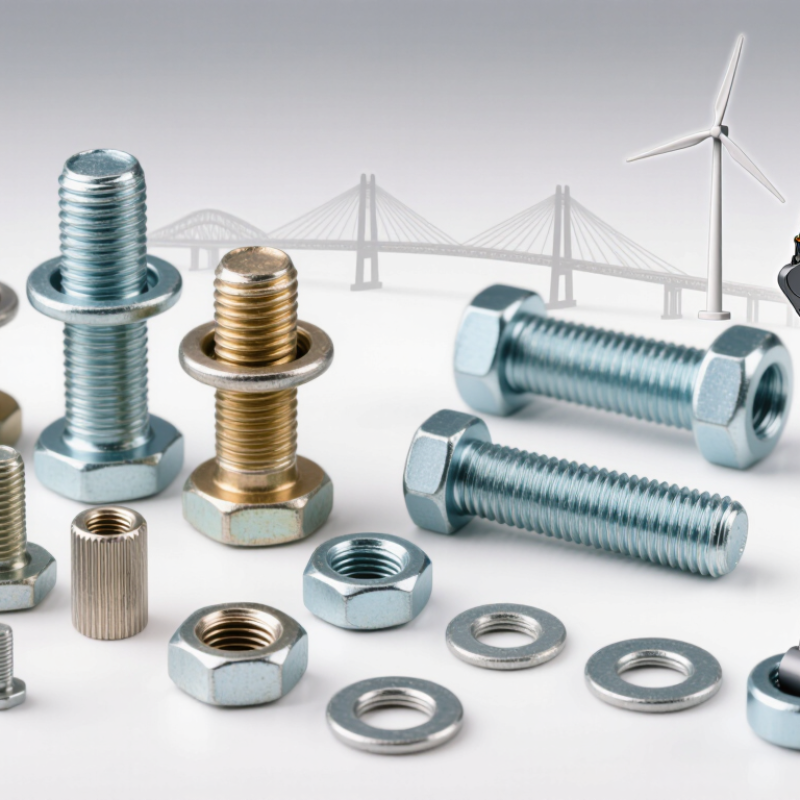
Top Heavy Duty Fasteners for Global Buyers?

Heavy-Duty Fasteners: Definition, Purpose, and Industrial Applications

Top Heavy Duty Fasteners for Global Buyers?

Heavy-duty fasteners secure high-load joints in bridges, processing equipment, wind towers, rail systems, and heavy vehicles. They commonly include structural bolts, anchor bolts, studs, nuts, and hardened washers. Their purpose is controlled clamping, not simply maximum strength. A correctly tightened joint resists vibration, fatigue, shear, and thermal movement.

Material selection begins with load conditions and exposure. Carbon steel supports many structural applications, while stainless steel suits corrosive or hygienic environments. High-strength grades require verified heat treatment and traceable testing. ISO 898-1 defines mechanical requirements for many metric carbon-steel fasteners. ASTM F3125 covers several structural bolt assemblies used in steel construction. Field inspectors also check thread damage, washer seating, coating thickness, and torque records. Small details matter.

Market demand reflects this industrial scale. Grand View Research estimated the global industrial fasteners market at about USD 84.7 billion in 2023, with continued growth projected through 2030. The World Steel Association reported approximately 1.89 billion tonnes of crude steel production in 2023, supporting broad demand across infrastructure and machinery. However, market growth does not guarantee reliable performance. It deserves challenge. A cheap bolt can become an expensive shutdown after corrosion, poor tightening, or mixed-grade installation. Buyers should request mill certificates, lot traceability, third-party inspection, and documented performance tests. One practical weakness remains common: specifications often describe the fastener, but not the joint.

Key Materials and Strength Grades for Global Fastener Buyers

Top Heavy Duty Fasteners for Global Buyers?

Material choice sets the foundation for heavy duty fastening. Carbon steel offers good value for general construction and machinery. Alloy steel performs better under high loads, vibration, and repeated stress. Stainless steel helps resist moisture, chemicals, and coastal corrosion. However, stainless fasteners may provide lower tensile strength than hardened alloy steel. They can also gall during installation. That detail is easy to miss.

Strength grades need careful checking. Metric grades such as 8.8, 10.9, and 12.9 indicate different tensile and yield performance. Grade 10.9 suits many demanding connections, while 12.9 requires controlled installation and suitable mating materials. Buyers should not compare grades across standards without reviewing the specification. Heat treatment, thread accuracy, coating thickness, and batch testing can change real performance. A certificate alone is not enough if traceability is weak.

Tips: Match the fastener to the load, temperature, and corrosion environment. Request material certificates, mechanical test results, and dimensional reports. Confirm whether the project uses metric or imperial threads. Check torque guidance before installation. Over-tightening can damage threads or reduce clamping reliability. Also review washer compatibility and galvanic corrosion risks. A cheaper grade may look efficient, but replacement costs can be much higher. My own assessment would remain cautious: field conditions often expose weaknesses that laboratory data does not show.

Top Heavy Duty Fasteners for Global Buyers

Key Materials and Strength Grades for Global Fastener Buyers

ISO metric property classes indicate the mechanical strength of carbon steel and alloy steel bolts, screws, and studs. The figures below show commonly specified minimum tensile strength and nominal yield or proof strength values in MPa.

Carbon steel is widely used for general structural and industrial fastening, while alloy steel is preferred for higher-strength applications such as heavy machinery, pressure equipment, and infrastructure. Stainless steel provides superior corrosion resistance, although its strength classification follows different standards.

Major Types of Heavy-Duty Fasteners and Their Best Uses

Heavy-duty fasteners support structures, machinery, transport equipment, and outdoor installations. Choosing the correct type depends on load direction, material thickness, vibration, and exposure. High-strength structural bolts suit steel frames, bridge components, and warehouse connections. Their heavy hex heads provide dependable wrench contact during controlled tightening. A washer helps spread pressure across the steel surface.

Anchor bolts secure columns, base plates, and heavy machines to concrete foundations. Cast-in anchors work well during new construction, while expansion or chemical anchors can suit approved retrofit applications. Threaded rods are useful for suspended equipment, pipe supports, and adjustable connections. Pair them with suitable nuts and washers. Fit matters.

For repeated vibration, prevailing-torque nuts or a correctly specified locking system can reduce loosening. Hardened washers are valuable beneath high-strength nuts because ordinary washers may deform under pressure. Stainless steel fasteners resist many corrosive environments, but they are not automatically suitable for every structural load. Material compatibility also matters, especially where moisture can create galvanic corrosion.

In field inspections, damaged threads, uneven bearing marks, and rust around holes often reveal installation problems. Torque values should follow the project specification, not guesswork. A clean thread is essential. Lubrication can change clamping force dramatically, even when the torque setting stays unchanged. I have seen teams focus on bolt strength while overlooking joint design and hole alignment. That mistake deserves review. Temperature, access, and maintenance schedules may also influence the best fastener choice.

Top Heavy Duty Fasteners for Global Buyers: Major Types and Their Best Uses

Fastener Type Common Materials Typical Standards or Grades Main Strength Advantage Best Applications Environmental Suitability Key Buying Considerations
Heavy Hex Bolts Carbon steel, alloy steel, stainless steel ASTM A307; ASTM F3125 Grade A325 or A490; SAE Grade 5 or Grade 8 Large hexagonal head and substantial shank provide high clamping force and resistance to shear loads. Steel structures, bridges, heavy equipment frames, machinery bases, and structural connections. Suitable for indoor and outdoor use when protected with an appropriate coating or selected in stainless steel. Confirm diameter, length, thread type, strength grade, coating, and required tightening method.
Structural Bolts Heat-treated medium-carbon or alloy steel ASTM F3125 structural bolt grades; ISO 898-1 property classes 8.8 and 10.9 Engineered for high-strength structural joints and controlled installation using torque or tension methods. Building frames, towers, industrial platforms, cranes, and heavy steel fabrication. Best for demanding outdoor service when hot-dip galvanized or otherwise corrosion-protected. Check joint design, slip requirements, bolt assembly compatibility, and installation certification.
Anchor Bolts Carbon steel, stainless steel, galvanized steel ASTM F1554 Grades 36, 55, and 105; ISO-compatible material specifications where applicable Transfers tension and shear forces from structural members into concrete or masonry foundations. Column bases, equipment foundations, sign supports, guardrails, and industrial structures. Suitable for foundations and exterior installations; corrosion protection is important in wet or coastal areas. Specify embedment depth, thread length, bend or head configuration, diameter, and foundation design loads.
Expansion Anchors Zinc-plated carbon steel, stainless steel Product performance commonly evaluated under regional concrete-anchor requirements Creates mechanical anchorage by expanding against the sides of a drilled hole in concrete or masonry. Equipment mounting, handrails, steel brackets, cable trays, and medium-to-heavy fixtures. Indoor and outdoor use; stainless steel is preferred in damp, corrosive, or exposed locations. Verify base-material strength, hole diameter, embedment, edge distance, spacing, and allowable load.
Wedge Anchors Carbon steel, zinc-plated steel, stainless steel Commonly supplied to regional mechanical-anchor specifications Provides strong, consistent anchorage in solid concrete through a torque-activated expansion clip. Structural steel attachments, machinery, shelving, barriers, and heavy-duty concrete fixtures. Carbon steel is suitable for protected interiors; galvanized or stainless options improve outdoor durability. Use only in sound concrete; check cracked or uncracked concrete ratings, embedment, torque, and edge distance.
Chemical Anchors Threaded steel rods with epoxy, hybrid, or cementitious resin Design approval depends on the resin system and local construction regulations Delivers high pull-out capacity with low expansion pressure, making it useful near edges and close spacing. Rebar connections, structural retrofits, heavy machinery, façade supports, and deep embedment applications. Can perform in cracked concrete and harsh environments when the selected resin and rod are approved for those conditions. Control hole cleaning, curing time, temperature, embedment depth, and installation procedure.
Threaded Rods and Studs Carbon steel, alloy steel, stainless steel ASTM A193, ASTM A320, ASTM F1554, ISO 898-1 classes 8.8 and 10.9 Allows flexible connection lengths and continuous adjustment with nuts and washers. Pipe supports, HVAC systems, equipment suspension, flanged joints, and structural bracing. Available for indoor, outdoor, high-temperature, and corrosive service depending on material and coating. Confirm tensile class, thread pitch, straightness, cut-end treatment, temperature range, and corrosion resistance.
U-Bolts Carbon steel, galvanized steel, stainless steel Manufactured to dimensional and material requirements specified by the application Clamps round or rectangular components securely while distributing load around the supported member. Pipe supports, vehicle suspension, trailers, cable systems, agricultural equipment, and structural clamps. Galvanized steel is common outdoors; stainless steel is preferable for marine or chemically aggressive conditions. Match inside width, leg length, bend radius, thread length, load direction, and pipe or member diameter.
Flange Bolts Carbon steel, alloy steel, stainless steel SAE J429 Grades 5 and 8; ISO 898-1 classes 8.8 and 10.9 Integrated flange distributes clamping pressure and can reduce the need for a separate washer. Heavy equipment, automotive assemblies, machinery housings, agricultural equipment, and steel fabrications. Coated carbon steel suits general service; stainless steel improves corrosion resistance but may have different strength limits. Check flange diameter, bearing surface, serration requirements, strength class, and washer compatibility.
Socket Head Cap Screws Alloy steel, stainless steel ASME B18.3; ISO 4762; ASTM F835; ISO 898-1 class 12.9 High tensile strength and a compact cylindrical head permit strong joints in confined spaces. Machine tools, industrial automation, molds, precision equipment, and compact mechanical assemblies. Alloy steel is generally used indoors or with protective finishes; stainless steel is suited to corrosive areas. Verify socket size, head clearance, thread engagement, preload, and risk of galling with stainless steel.
Heavy Hex Nuts Carbon steel, alloy steel, stainless steel ASTM A563; ASTM A194 for selected high-temperature or pressure-service applications; ISO 898-2 Large bearing surface and compatible strength support high-preload bolted joints. Structural steelwork, pressure equipment, machinery, foundations, and heavy fabrication. Use with matching bolt coatings and materials to reduce galvanic corrosion and thread damage. Match nut property class to bolt grade; confirm thread series, finish, prevailing torque, and washer use.
High-Strength Washers Hardened carbon steel, alloy steel, stainless steel ASTM F436; ASTM F844 for general-purpose flat washers; ISO шайба equivalents by application Spreads bearing pressure, protects the joint surface, and helps maintain reliable clamp load. Structural bolting, slotted holes, timber connections, equipment bases, and large bearing surfaces. Choose a finish compatible with the bolt and nut, especially in outdoor or dissimilar-metal assemblies. Check hardness, outside diameter, thickness, hole size, surface condition, and structural approval requirements.

International Standards, Dimensions, Coatings, and Compatibility

Global buyers need heavy-duty fasteners that match both the project load and the local specification system. Common references include ISO, ASTM, and EN standards, but they are not automatically interchangeable. Check the required grade, tensile strength, proof load, thread profile, and test method. A certificate should identify the heat number and inspection results, not only state “compliant.”

Dimensions require equal care. Confirm nominal diameter, thread pitch, thread length, head dimensions, washer thickness, and tolerance class. Metric and inch threads may look similar but cannot safely substitute for each other. Fine threads can improve adjustment and vibration resistance, while coarse threads usually perform better during field assembly. That choice depends on the joint design. It is easy to miss.

Tips: Ask for a dimensioned drawing before ordering. Compare actual thread gauges, not visual impressions. Keep samples from the approved batch for future checks.

Coating selection affects service life and compatibility. Zinc-based coatings suit many general environments, while thicker protective systems may be needed near saltwater or industrial moisture. Match the coating to the nut, washer, and mating material. Mixed metals can create galvanic corrosion. Certain high-strength fasteners also require careful coating control because hydrogen embrittlement is a serious risk. Storage matters too: sealed packaging, dry shelves, and clear batch labels reduce preventable failures. Even an excellent fastener can perform poorly when installation torque, lubrication, or surface condition is ignored.

How to Evaluate Suppliers, Quality, Pricing, and Delivery Options

Top Heavy Duty Fasteners for Global Buyers?

Choosing heavy duty fasteners starts with the supplier, not the lowest quotation. Ask for production experience with your required material, dimensions, strength class, and surface finish. A dependable supplier should explain its process clearly, from raw material inspection to final packing. Request mill certificates, dimensional reports, tensile test results, and batch traceability. Documents matter.

Quality checks should match real service conditions. Confirm thread accuracy, hardness, corrosion resistance, and load performance. For outdoor structures, examine coating thickness and salt spray data. A sample inspection can reveal burrs, damaged threads, or inconsistent plating before a full order. Inspect the packaging too. Moisture inside weak cartons can damage otherwise acceptable parts.

Pricing needs a wider view. Compare material grade, testing, packaging, tooling, payment terms, and transport costs. A cheap unit price may hide expensive rework. Sometimes it does.

Delivery planning requires more than a promised date. Check production capacity, inspection lead time, port options, customs documents, and backup shipment plans. Ask whether the supplier can reserve production space during peak seasons. A written tolerance for quantity and delivery delays is useful, though not perfect. Global buyers should also confirm applicable standards, import requirements, and communication hours. Small misunderstandings can become large delays. Keep one approved sample and one signed specification for every repeat order.

FAQS

What are heavy-duty fasteners used for?

They secure high-load joints in bridges, machinery, rail systems, wind towers, and heavy vehicles. Their purpose is controlled clamping. Maximum strength alone is not enough. Proper tightening helps resist vibration, fatigue, shear, and thermal movement.

Which fastener types support heavy industrial applications?

Common types include structural bolts, anchor bolts, threaded studs, nuts, and hardened washers. Structural bolts suit steel frames and warehouse connections. Anchor bolts secure columns, base plates, and machines to concrete. Threaded studs support suspended equipment and pipe systems.

How should buyers choose the fastener material?

Start with load, temperature, moisture, and chemical exposure. Carbon steel suits many structural applications. Stainless steel helps in corrosive or hygienic environments. High-strength materials need verified heat treatment and traceable testing. Stainless steel is not automatically suitable for every load.

When are anchor bolts or threaded rods appropriate?

Cast-in anchor bolts work well during new concrete construction. Expansion or chemical anchors may suit approved retrofit projects. Threaded rods allow adjustable connections for suspended equipment. Always match the anchor system with the concrete condition and applied load. Fit matters.

How can fasteners resist vibration and loosening?

Use suitable locking systems or prevailing-torque nuts when vibration is expected. Hardened washers help prevent surface deformation under heavy pressure. Check thread condition, washer seating, and joint alignment. A locking nut cannot correct a poorly designed joint.

Why are torque procedures important?

Torque controls clamping force, but the setting must follow the project specification. Lubrication can change clamping force significantly. Clean threads are essential. Inspectors should review torque records, thread damage, rust, and uneven bearing marks. Guesswork often fails.

What quality documents should buyers request?

Request material certificates, dimensional reports, tensile results, and batch traceability. Ask for coating thickness and corrosion test data for outdoor use. Sample inspections can reveal burrs, damaged threads, and inconsistent finishes. Documents matter, but they do not replace physical inspection.

How should buyers compare supplier prices and delivery promises?

Compare material grade, testing, packaging, tooling, payment terms, and transport costs. A low unit price may hide rework, corrosion, or inspection expenses. Confirm production capacity, inspection time, customs documents, and backup shipment plans. Keep an approved sample and signed specification for repeat orders. A promised date is not always reliable.

Conclusion

Heavy Duty Fasteners are essential components for demanding construction, infrastructure, energy, transportation, and industrial applications where high load capacity, durability, and reliable joint performance are required. This article explains their definition, purpose, and common uses, while introducing key materials such as carbon steel, alloy steel, and stainless steel, along with strength grades that help global buyers select suitable products for different working conditions.

It also reviews major fastener types, including bolts, nuts, washers, studs, and structural fastening systems, and explains how dimensions, thread forms, coatings, and international standards affect compatibility and corrosion resistance. For purchasing decisions, buyers should evaluate supplier experience, quality control, testing documentation, production consistency, pricing transparency, minimum order quantities, packaging, lead times, and delivery capabilities. A complete assessment of technical requirements and supplier reliability can help ensure safe, efficient, and cost-effective fastening solutions across international markets.

Liam

Liam

Liam is a dedicated marketing professional with a deep expertise in our company’s innovative products and services. With years of experience in the industry, he has a keen understanding of market trends and the competitive landscape, allowing him to effectively communicate the unique benefits of......